 how-to
Can You Catch Up on Sleep After Night Shifts?
Table of Contents
- Can You Catch Up on Sleep After Night Shifts? The Honest Answer
- Continuous Sleep: Night Shift vs 9 to 5, Compared
- How Much Sleep Do Night-Shift Workers Need?
- Sleep After a Night Shift: What Actually Works
- The Split Sleep Schedule for Night-Shift Workers
- How to Recover from Night Shifts Without Wrecking Your Week
- When Catching Up on Sleep Is Not Enough
- Conclusion: What to Do With This
- Frequently Asked Questions
Last Updated: October 12, 2026
Can You Catch Up on Sleep After Night Shifts? The Honest Answer
Yes, you can recover from a run of night shifts, but you cannot truly catch up on sleep in one long lie-in. The NHS is clear that lost sleep builds up as a debt, and a single ten-hour stretch on your day off does not clear it. This guide from Noctiva Health explains what actually helps.
Here is the short version. Sleep after a night shift works best when you plan two shorter sleeps rather than chasing one perfect block. We will show you how to build that plan around a real rota.
First, a quick reality check. Most night workers get less continuous sleep than day workers, and that gap is normal rather than a personal failing. Your body clock is trying to run a 9 to 5 schedule while you are on shift at 3am. It is a bit like putting diesel in a petrol car and hoping for the best.
The good news: with the right timing, you can recover well enough to function, and to feel human again. Below, we cover how much sleep you need, what works after a night shift, and when to speak to your GP.
Continuous Sleep: Night Shift vs 9 to 5, Compared
The table below shows a typical pattern, not a rule. Your own numbers will shift with your rota, your children, and whether the neighbour chooses your morning off to mow the lawn.
| Sleep pattern | 9 to 5 worker | Night shift worker |
|---|---|---|
| Main sleep block | 7-8 hours at night | 4-6 hours in the morning |
| Split sleep | Rare | Common, often 2 blocks |
| Time to fall asleep | 10-20 minutes | 30-60 minutes |
| Disruptions | Occasional | Doorbell, deliveries, daylight |
| Weekly total | Roughly 49-56 hours | Often 42-49 hours |
That last row matters. Over a week, the shortfall adds up quietly. You may not notice it until your third night shift, when the vending machine starts to look like a close friend.
How Much Sleep Do Night-Shift Workers Need?
Night-shift workers need the same seven to nine hours of sleep that everyone else needs. The difference is not the amount, it is how hard those hours are to get.
Shift work runs against your circadian rhythm, the internal clock that tells you when to feel alert and when to feel sleepy. That clock is stubborn. It does not care that your shift starts at 10pm.
Why Seven to Nine Hours Is Harder Than It Sounds
Several things get in the way:
- Daylight on the drive home signals "wake up" to your brain
- Traffic, school runs and deliveries peak just as you settle
- Your body temperature and hormones are set for daytime waking
- Caffeine from the shift may still be in your system
So aim for seven to nine hours, but expect it in pieces. Two blocks of four hours can beat one broken six.
Sleep After a Night Shift: What Actually Works
The best approach after a night shift is a short sleep as soon as you get home, then a longer block later in the day. This split protects your core hours without fighting biology all morning.
Keep the first sleep short, around 90 minutes to two hours. Then get up, eat something proper, and let your body have its natural lull in the afternoon.
A few things help this work:
- Wear sunglasses on the way home to limit morning light
- Keep your bedroom dark, cool and quiet
- Tell the household your plan so the doorbell gets a rest
- Avoid a big caffeine hit in the last few hours of your shift
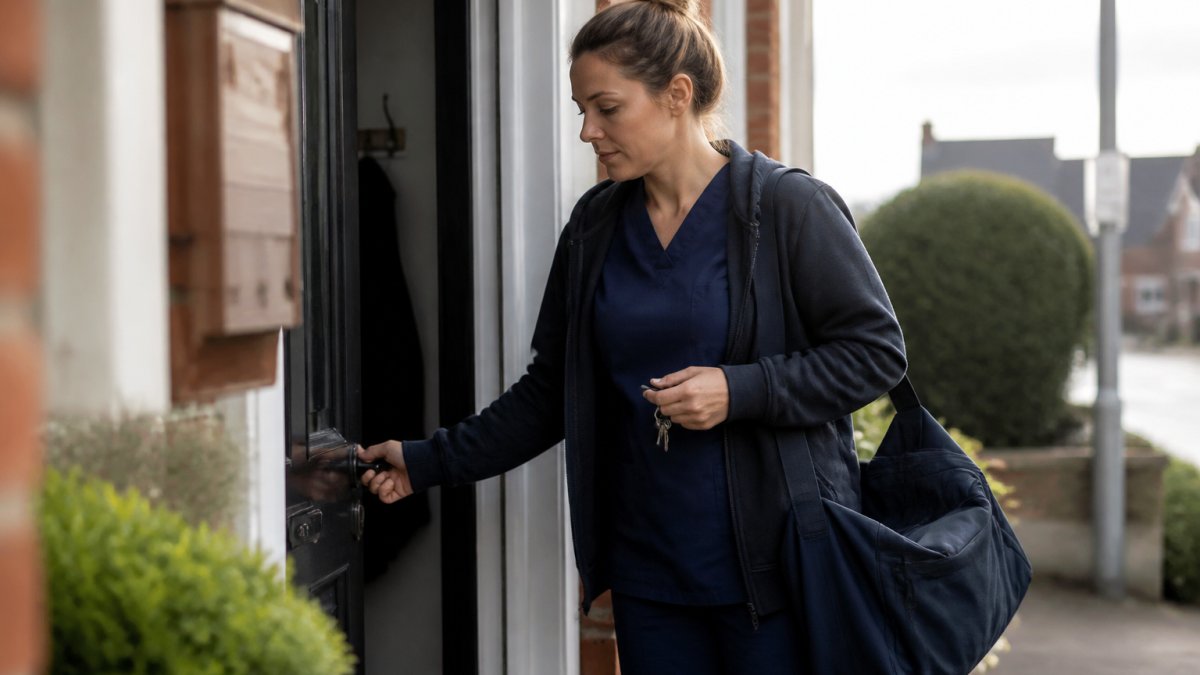
An Illustrative Shift Timetable
Here is a hypothetical plan for someone finishing a night shift at 7am. Adjust the times to suit your own rota.
| Time | What to do |
|---|---|
| 7:00am | Finish shift, sunglasses on, drive home |
| 7:30am | Light snack, no heavy meal |
| 8:00am | First sleep block, 90 minutes to 2 hours |
| 10:00am | Wake, shower, eat a proper meal |
| 1:00pm | Second sleep block, 3 to 4 hours |
| 5:00pm | Wake, daylight, move about |
| 9:00pm | Wind down before the next shift |
This is a guide, not a script. Some people do better with one longer morning sleep. Try both and see what suits you.
The Split Sleep Schedule for Night-Shift Workers
A split sleep schedule is when you divide your sleep into two blocks instead of one. For night workers, it is often the most realistic option.
The idea is simple. You take a short sleep right after your shift, then a longer one before your next shift. This keeps you from trying to force eight straight hours when your body is not ready.
Split sleep is not perfect. It can feel odd at first, and it takes a week or two to settle. But for many shift workers, it beats lying awake and watching the clock.
How to Recover from Night Shifts Without Wrecking Your Week
Recovering from night shifts is easier when you treat your days off as a gentle landing, not a crash. Sudden big shifts in your sleep time make the next rota harder.
Try these steps:
- Shift your bedtime by an hour or two a day, not five
- Get outside in daylight on your days off to nudge your clock
- Keep meals regular to support your energy
- Move your body, even a short walk helps
- Avoid a huge weekend lie-in that undoes the week
If your rota rotates, you may never fully adjust, and that is normal. The goal is to manage the load, not to beat it.
For general advice on tiredness and sleep, the NHS guidance on sleep and tiredness is a sensible starting point. The Health and Safety Executive guidance on shift work also covers how employers should manage fatigue risks.
When Catching Up on Sleep Is Not Enough
Sometimes rest alone does not fix how you feel. Ongoing exhaustion, low mood or trouble concentrating are worth a conversation with your GP.
Watch for signs that you need more support:
- You feel drained even after a good sleep
- You are falling asleep while driving
- Your mood stays low for weeks
- You are relying on alcohol to wind down
Shift work can also affect your nervous system and how tired you feel day to day. Some people find that supporting their diet and daily routine helps them cope. Noctiva Reset is a food supplement made for adult shift workers, with magnesium, which contributes to a reduction of tiredness and fatigue, and supports normal nervous system function. It is not a substitute for sleep, and it will not reset your body clock.

If you take medication, in particular antidepressants, or you are under medical supervision, speak to a healthcare professional before trying any supplement.
Conclusion: What to Do With This
You cannot erase a week of night shifts with one long sleep, but you can recover well with a plan. Split your sleep, protect your morning rest, and be kind to yourself on the days off.
If you want to support your routine, Noctiva Reset is a UK-made food supplement for night shift workers. It is designed around the realities of shift work, with a full dose declaration with no proprietary blends.
Order now and see how it fits your rota.
Frequently Asked Questions
Can you catch up on sleep after night shifts?
Partly, but not fully. You can repay some of your sleep debt with a longer sleep on your days off, and most people feel better for it. What you cannot do is bank sleep in advance or erase weeks of short sleep with one long lie-in. The most reliable approach is to protect a consistent sleep window after each shift, then add a slightly longer sleep on your first rest day. If you are regularly finishing nights feeling wrecked, that is worth mentioning to your GP.
How many hours should you sleep after a night shift?
Aim for the same seven to nine hours that any adult needs, even though daytime sleep often comes in shorter stretches. Most night-shift workers find they manage six to seven and a half hours in one block, sometimes with a short nap before the shift. If you consistently get under six hours across the week, your concentration, mood and reaction times will suffer. Keep your room dark, cool and quiet, and treat that sleep window as a fixed appointment rather than something to squeeze in.
Is it better to sleep straight after a night shift or stay up for a while?
Sleeping soon after you get home usually works better, because your body is still running on night-shift time and the sleep pressure is high. Stay up for hours and you hit the morning alerting signal, which makes falling asleep much harder. If you have a school run or childcare to handle, try a short nap first and a longer block later. Either way, keep the routine consistent across your run of nights so your body knows what is coming.
When should you speak to a GP about sleep problems?
Book an appointment if you have struggled with sleep for more than a few weeks, if you feel exhausted despite getting enough hours, or if you snore heavily, wake gasping or fall asleep during the day without meaning to. Shift work can trigger or worsen conditions such as insomnia and sleep apnoea, and these need proper assessment rather than another supplement. Take a note of your rota and typical sleep times to the appointment, as it helps your GP see the pattern.